
Why Nail Technicians Should Always Soak Clients’ Feet (And Ignore the No-Soak Fear Tactics)
There is a growing trend in the beauty industry where a very negative, very loud voice is telling nail technicians to stop soaking clients’ feet. She gives presentations full of dramatic claims about water waste, bacteria, and equipment cost—but when you look closely, the information is exaggerated, incomplete, or simply untrue.
Soaking has been a safe, effective, and client-loved part of pedicure services for decades. When done to state board standards, soaking is not only safe—it’s essential for client comfort, technician ergonomics, and the quality of the results you deliver.
This article walks through each of the common “anti-soak” arguments and gives you the facts you need to stand confidently in your professionalism and continue offering full, luxurious, proper pedicure services.
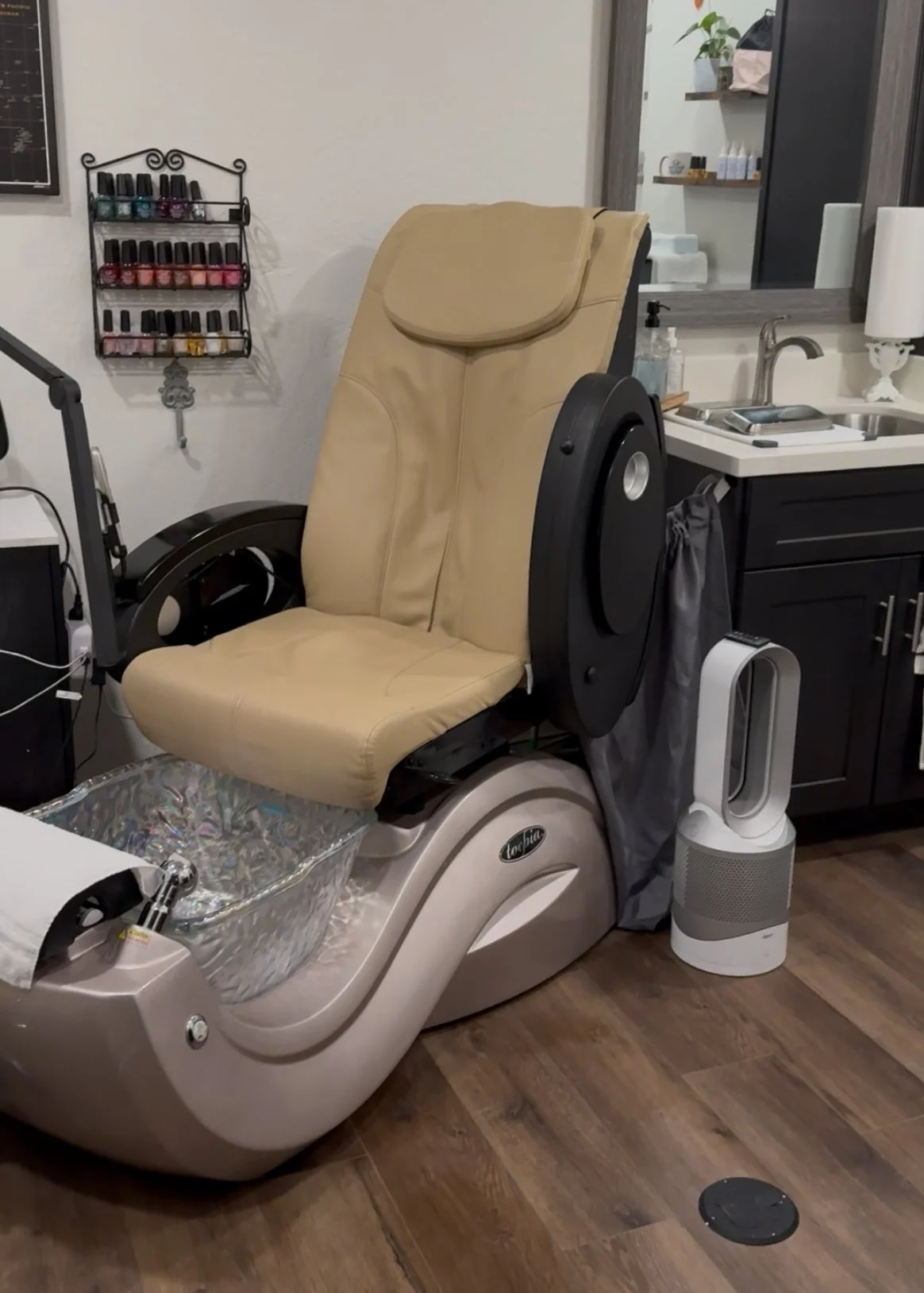
Soaking Isn’t the Problem—Misinformation Is
The “no-soak” message is usually packaged as:
- “Water is being wasted.”
- “Disinfectant is too expensive.”
- “Pedicure tubs are dangerous.”
- “Equipment, plumbing, and cleaning take too much time and money.”
But when you compare these talking points to real-world salon practice and state board standards, a different picture appears: soaking is safe, efficient, and absolutely necessary for a high-quality pedicure service.
Myth #1: “Pedicures waste 12–15 gallons of water per service.”
Fact: Most pedicure tubs hold around 3.5–4.5 gallons of water, not 12–15 gallons.
The number “12–15 gallons” is designed for shock value, not accuracy. A properly sized salon pedicure tub uses roughly the same amount of water as:
- Filling a large cooking pot, or
- A quick shower, or
- A couple of sinkfuls of dishes.
When you put the numbers in context, water usage is reasonable and controlled. No one is dumping 15 gallons down the drain for a single pedicure. The “waste” narrative falls apart as soon as you know the real capacity of a tub.
Myth #2: “Disinfectant is too expensive and disposal is a problem.”
Fact: There is no special disposal cost for disinfectant in a pedicure tub, and you must disinfect surfaces whether you soak or not.
Disinfectant must be:
- Properly diluted,
- Used according to manufacturer instructions, and
- Rinsed or drained as directed.
You don’t pay extra to dispose of it—it goes down the drain just like other approved cleaning solutions. And here’s the key point: every service area in a salon must be cleaned and disinfected. If you avoid soaking, you still have to disinfect bowls, trays, tools, and surfaces. Soaking doesn’t add a unique disinfectant burden—it simply directs that cleaning into one controlled area.
Myth #3: “Pedicure tubs limit movement and create problems for technicians.”
Fact: Proper ergonomic pedicure equipment is one of the best investments you can make for your body and your career.
A well-designed pedicure setup with a tub:
- Supports your back, hips, and shoulders,
- Positions the client’s feet in a predictable, stable way,
- Reduces awkward twisting and leaning, and
- Helps you control your tools with precision.
Soaking also softens the skin and nails, which means less force is required to trim, file, and clean. Less force on the client’s feet means less strain on your own muscles and joints. That’s not a limitation— that’s a huge ergonomic advantage.
If someone is teaching that “no equipment” is safer, they are not considering the long-term impact on the technician’s body or the comfort of the client.
Myth #4: “Waterborne bacteria make soaking too risky.”
Fact: When a tub is cleaned and disinfected according to state board standards, the risk of cross-contamination is extremely low.
Problems arise from poor cleaning habits, not from water itself. Bacteria and biofilm can develop on:
- Dirty pedicure tubs,
- Uncleaned basins or bowls,
- Reusable tools that are not properly disinfected, and
- Any device—steamer, basin, tray—that isn’t maintained correctly.
Water is not the villain. A lack of training, shortcuts in cleaning, and ignoring manufacturer and state board instructions are the real issues. When tubs are cleaned properly, soaking is safe and aligns with the standards we’re all required to follow.
Myth #5: “Equipment is too expensive to maintain.”
Fact: A pedicure tub is one of the most cost-effective pieces of equipment you can own, and it directly attracts clients.
Clients associate a proper pedicure chair or tub with:
- Relaxation,
- Comfort,
- Professionalism, and
- Value.
Meanwhile, many of the “dry pedicure alternatives” being pushed—steamers, extra devices, special platforms, dust extractors—are more expensive to purchase and maintain and do not provide the same level of client satisfaction as a warm soak.
If someone is telling you to get rid of the pedicure tub but add a steamer and extra equipment, you’re not saving money. You’re simply swapping a proven, client-loved system for more complicated tools that do less.
Myth #6: “Soaking negatively impacts skin and nails.”
Fact: Soaking softens, hydrates, and prepares the skin and nail plate for safer care.
A proper foot soak:
- Makes thick nails more flexible and easier to trim,
- Softens compacted debris,
- Prepares callused areas for controlled reduction, and
- Reduces friction and resistance during filing and cleaning.
Working completely dry often means:
- More scraping,
- More friction,
- More force, and
- More risk of causing discomfort or micro-injury.
Soaking, done correctly, supports both the client’s experience and the technician’s control over the service.
Myth #7: “Plumbing, labor, and permits make tubs unrealistic.”
Fact: In many cases, you do not need a special permit to connect a pedicure tub to an existing sink line, and portable tub options exist for studios.
Salon owners can choose:
- Plumbed pedicure chairs connected to existing plumbing, or
- Professional portable tubs that meet state board regulations.
The idea that plumbing makes pedicure tubs “impossible” or “unrealistic” simply isn’t accurate in most locations. It’s another fear-based barrier that doesn’t match how real salons operate.
Myth #8: “You need cleaning logs for pedicure tubs.”
Fact: Most state boards require that tubs are cleaned and disinfected properly—they do not require written cleaning logs.
While some salons choose to use logs as part of their internal policies, it’s not a universal legal requirement. What regulators care about most is:
- Is the tub being cleaned after each service?
- Is the correct disinfectant being used?
- Is the contact time being respected?
Presenting cleaning logs as a mandatory burden is misleading and can scare newer techs away from offering a service that is completely manageable with good habits.
Myth #9: “Pedicure stations take up too much space.”
Fact: The amount of space required to work on a client’s feet is roughly the same whether you use a tub or not.
You still need:
- A place for the client to sit,
- A place for their feet to rest, and
- Room for you to position yourself safely.
A compact pedicure tub can actually make the service area more organized and contained, which is especially helpful in small spaces. Removing the tub does not magically create square footage—it just removes a key comfort feature.
Myth #10: “Cleaning tubs takes too much time and labor.”
Fact: Proper cleaning of a pedicure tub takes about 5 minutes and often saves time compared to cleaning dry debris off the floor and surrounding area.
A standard cleaning routine might look like:
- Drain the water,
- Rinse the tub,
- Fill or spray with properly diluted disinfectant,
- Respect the full contact time,
- Rinse and dry.
Meanwhile, dry pedicures often create dust, flakes, and debris that spread across the floor and furniture. You end up sweeping, vacuuming, wiping, and chasing particles everywhere. A tub contains that mess and makes cleanup more efficient.
The Real Benefits of Soaking Clients’ Feet
When you step back from the scare tactics and focus on real client care, soaking becomes an obvious necessity:
- Comfort: Clients relax, soften, and feel pampered.
- Safety: Softer nails and skin mean less force and fewer accidental nicks.
- Results: Callus reduction and toenail cleaning are more effective.
- Ergonomics: You work with less strain on your hands, wrists, and back.
- Client retention: People remember how they felt in your chair and return for that experience.
Removing the soak removes a huge part of what makes a pedicure feel complete, restorative, and worth the price.
Why “No-Soak Pedicures” Are Being Pushed So Hard
Here’s the part no one says out loud: people only push extreme “no-soak” positions when they have something else to sell.
If someone is:
- Exaggerating state board rules,
- Overstating the danger of water,
- Promoting obscure gadgets or systems as the “only safe way,”
- Using fear to get attention,
then their priority is not client comfort and technician longevity. Their priority is selling you an alternative.
A Message to Nail Technicians: Stand in Your Professionalism
Do not let fear-based messaging convince you to lower your service quality, reduce client comfort, or abandon a safe, proven practice that has served millions of people for decades.
Your clients come to you for:
- Relief,
- Education,
- Comfort,
- Trust,
- Skill, and
- Transformation.
Soaking the feet isn’t “old-fashioned” or “dangerous”—it is the foundation of a proper pedicure when performed to professional standards. It makes your work easier, your clients happier, and your services more valuable.
Stick with what works. Stick with what’s safe. Stick with what delivers real, visible, emotional results. And most importantly, stick with facts and sound practice, not scare tactics and negativity.