
The Definitive Guide to Elderly Toenail Care (Non-Medical, Safe & Gentle)
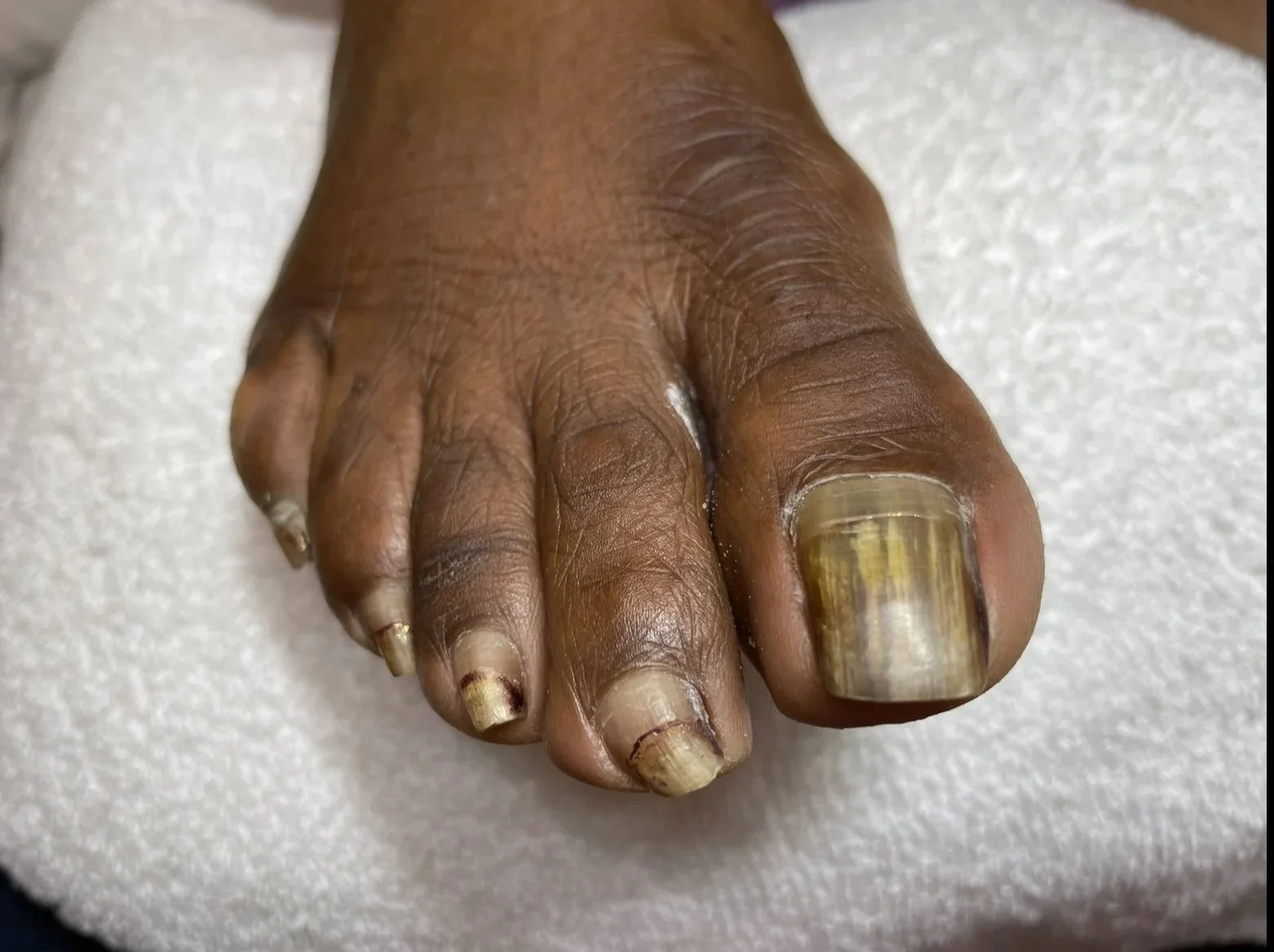
Caring for elderly toenails is one of the most overlooked parts of personal care, yet it has one of the greatest impacts on daily comfort, mobility, and self-confidence. As toenails naturally thicken, curve, and compact with age, many seniors struggle with pain, pressure, difficulty trimming, and embarrassment.
Here’s the truth:
Most elderly toenail issues are not medical, not covered by insurance, and do not require a podiatrist.
They’re normal aging changes that respond beautifully to gentle, non-invasive care.
In this guide, I’ll explain why toenails change, what’s safe for non-medical caregivers and nail technicians, and how to perform a step-by-step thick toenail cleaning that brings immediate relief. You’ll also see how to choose the right tools and when it’s time to involve a podiatrist.

- Why Elderly Toenails Change
- Common Non-Medical Elderly Toenail Issues
- What Caregivers & Nail Techs Can Safely Do
- What Insurance Doesn’t Cover
- How to Trim Elderly Thick Toenails (Step-by-Step)
- Full Thick Toenail Cleaning Tutorial
- When to See a Podiatrist
- Best Tools & Kits for Elderly Toenail Care
- Frequently Asked Questions
1. Why Elderly Toenails Naturally Change with Age
As we age, our toenails naturally become:
- Thicker and harder
- More curved or pinched
- More brittle or crumbly
- More yellow or discolored
- More compacted with debris under and around the nail
This happens because of decreased circulation, years of shoe pressure, reduced cell turnover, difficulty reaching the feet, medications, genetics, and old nail trauma that adds up over time. None of these changes are a medical emergency; they are expected aging changes of the nail plate.
The good news is that they often respond extremely well to proper trimming, thinning, and non-invasive cleaning. That’s where restorative foot care and educated nail technicians make all the difference.
2. Common Non-Medical Elderly Toenail Issues
These are the toenail problems I see every day in elderly clients that are not medical diagnoses and do not require a podiatrist:
- Toenails that are very thick and difficult to cut
- Yellowing from age, pressure, or old trauma
- Curved or pincer toenails squeezing the toe
- Long, neglected nails that haven’t been trimmed in months or years
- Debris packed under the nail causing pressure and odor
- Pain from pressure in shoes, but no infection
- Dry, flaky skin around the nail and on the feet
These are comfort problems, not medical disease. They impact the person’s ability to walk, wear shoes comfortably, and feel confident showing their feet — but they’re typically not covered by insurance and not handled thoroughly in medical environments.
3. What Caregivers & Nail Technicians Can Safely Do
Within a non-medical scope of practice and good common sense, caregivers and trained nail technicians can safely:
- Trim long or thick toenails
- Gently reduce thickness with a file
- Shape and smooth sharp edges
- Remove loose surface debris around the nail
- Clean non-impacted sidewalls and under the free edge
- Smooth dry skin and callus (without cutting or breaking skin)
- Provide regular maintenance visits to prevent overgrowth
This type of care can prevent pain while walking, pressure sores, splitting nails, falls from imbalance, and the emotional weight of feeling ashamed of one’s feet. It’s an important act of dignity and compassion.
4. What Insurance Doesn’t Cover
Unless there is a qualifying systemic condition and very specific criteria are met, insurance does not cover:
- Routine toenail trimming
- Thick nail reduction
- Cleaning packed debris under nails
- Curved or pincer nail maintenance
- Callus smoothing for comfort
- Cosmetic improvement of nails
- Regular toenail grooming for elderly clients
That’s why so many seniors, caregivers, and families turn to online education and videos — they need help with real-life toenail problems that are non-medical, but very real.
5. How to Trim Elderly Thick Toenails (Step-by-Step)
How to Safely Trim Thick Elderly Toenails
Step 1: Soften or soak the toenails for 5–10 minutes with warm water to make them more flexible.
Step 2: Gently lift any loose debris under the free edge with a thin sidewall or cleanup tool.
Step 3: Trim slowly using small, controlled cuts. Never force the nippers through a hard nail.
Step 4: Reduce thickness by filing the nail surface with a diamond nail file to remove bulk.
Step 5: Shape and smooth the edges to prevent catching on socks and shoes.
Step 6: Moisturize the surrounding skin and nail with a gentle, non-irritating product.
Step 7: Maintain every 4–6 weeks to prevent painful overgrowth and pressure.
This simple routine alone can dramatically improve an elderly person’s comfort, mobility, and confidence.
6. Full Thick Toenail Cleaning Tutorial
In my restorative pedicure services, I follow a structured process designed to be gentle, non-invasive, and deeply relieving. Here’s the overview:
Step 1 — Assess the Nail
Look for thickness, curvature, color changes, old trauma, and compacted debris under or around the nail. Ask the person about their pain level, shoes they wear, and how long it has been since a proper trim.
Step 2 — Lift Debris Gently
Using a thin sidewall or cleanup tool, gently lift loose debris from under the free edge and along the sides of the nail. This relieves pressure and allows the nail to sit more naturally on the nail bed. Never dig aggressively or cause pain.
Step 3 — Reduce Thickness
This is often the most important comfort step. A diamond grit nail file can gradually reduce bulk and hardness:
- Lowering pressure inside shoes
- Helping the nail look more natural
- Allowing easier trimming now and in the future
- Reducing curvature in some pincer nails
- Improving the appearance of discoloration
Step 4 — Controlled Trimming
Use sharp, well-maintained nippers. Take tiny bites across the nail rather than one big cut. This prevents splitting and reduces the risk of cutting too deep. If the person feels pain or you meet resistance, stop and reassess rather than forcing the cut.
Step 5 — Smoothing & Shaping
File the edges smooth so the nail doesn’t catch on socks or bedding. Shape the nail to follow the natural contour of the toe without rounding deeply into the corners.
Step 6 — Aftercare
Apply a gentle moisturizer or a nourishing product like Restore A Nail around the nail and on the surrounding skin. Recommend proper socks and shoes that don’t squeeze the toes. Encourage regular maintenance rather than waiting until the nails become severely overgrown again.
Watching a full transformation helps caregivers and seniors understand that thick, difficult toenails can be restored gently and safely without feeling embarrassed.
7. When to See a Podiatrist
While most elderly toenail issues are non-medical, there are times when a podiatrist is absolutely the right choice. Seek medical care if you notice:
- Signs of infection (significant redness, heat, or pus)
- Sudden severe swelling or intense pain
- Green, foul-smelling discharge from around or under the nail
- Uncontrolled bleeding or wounds that will not heal
- Deep cracks, open sores, or ulcers on the feet
- Any concern in a person with diabetes that looks infected or serious
Everything else described in this guide–thickness, age-related yellowing, curvature, compaction, and difficulty trimming–is typically safe and appropriate for trained nail technicians and caregivers to manage within a non-medical scope.
8. Best Tools & Kits for Elderly Toenail Care
Having the right tools makes elderly toenail care easier, safer, and more comfortable for everyone involved. These are the types of tools I recommend:
- Stainless Steel Diamond Nail File – for gentle, controlled thinning of thick nails.
- Sidewall Cleaner Tool – to lift loose debris without digging or causing pain.
- Precision Toenail Nippers – sharp, professional-grade nippers that cut cleanly.
- Restore A Nail – to nourish and protect the nail and surrounding skin.
- Callus Rasp – to smooth rough, dry skin without cutting.
- Complete Restoration Kit – a curated set of tools designed to replicate the results you see in my videos.
9. Frequently Asked Questions About Elderly Toenail Care
Why do elderly toenails get so thick?
As we age, circulation slows, pressure from shoes accumulates, and the nail plate changes. Old injuries, trauma, and medications can also contribute. These factors make the nail grow thicker, harder, and more compacted over time.
Is it safe to trim thick elderly toenails at home?
Yes, as long as there are no signs of infection, open sores, or serious medical conditions affecting the feet. Use sharp, appropriate tools, trim slowly using small cuts, and stop if the person feels pain or you see anything concerning.
What tool is best for thick toenails?
A diamond nail file paired with sharp, professional toenail nippers is ideal. Dull or household tools can cause splitting, tearing, and unnecessary pain.
How often should elderly toenails be trimmed?
Most elderly clients do well with trimming every 4–6 weeks. Waiting too long allows the nails to become excessively thick and long, which increases pain and pressure in shoes.
Does Medicare cover routine toenail care?
Generally, no. Medicare only covers toenail care in very specific medical situations, such as when there is a qualifying systemic condition and strict criteria are met. Cosmetic and comfort-based toenail maintenance is almost always out-of-pocket.
How do I know if it’s fungus or trauma?
Fungus often spreads, may involve multiple nails, and is associated with changes in nail texture and color. Trauma from pressure or injury is usually localized to specific areas. A professional can help you understand the difference, and my educational videos explain it in simple, visual terms.
Thank you for taking the time to learn safe, gentle toenail care for the elderly. When we care for someone’s feet, we’re not just helping them walk with less pain — we’re restoring comfort, confidence, and dignity.